Imagine living in a world where the only way to remember a face was through a painting, a drawing, or memory itself. There were no photographs in albums, no portraits on phones, and no way to freeze a single moment in time. It’s hard to imagine isn’t it?
Around 200 years ago, everything began to change.
The invention of photography was not the work of one person in one moment. It was the result of curiosity, chemistry, art, and a simple but powerful idea: that light could be used to draw. The word photography itself comes from the Greek words photos, meaning “light,” and graphein, meaning “to draw.” Literally, photography means “drawing with light.”
This is the story of how humanity learned to capture light—and, in doing so, changed the way we see the world forever.
For centuries, people had found ways to record what they saw. Artists painted portraits, sketched landscapes, and created detailed illustrations. But even the most talented painter could only interpret a scene. A painting might capture the spirit of a person or place, but it could not preserve the exact details of a fleeting moment.
Early scientists and inventors were fascinated by the camera obscura, a darkened room or box with a small hole that projected an upside-down image of the outside world onto a wall or surface. Artists used it as a drawing aid, tracing the projected image onto paper.
But there was a major problem: the image disappeared as soon as the light changed.
What inventors needed was a way to make that image stay.
The earliest attempts to capture images using light began long before photography became practical. In 1802, Thomas Wedgwood, son of the famous potter Josiah Wedgwood, experimented with paper and leather coated in silver nitrate. He placed objects on the treated surface and exposed it to light, creating silhouettes.
It was an exciting breakthrough—but still there was a major problem. The images faded. Wedgwood could record a shadow, but he could not make it permanent. His friend, Sir Humphry Davy, published an account of these experiments in 1802, marking one of the first recorded attempts to produce a photograph.
These early experiments proved something important: light could alter certain materials. Now inventors had to find a way to stop that change at exactly the right moment.
The man often credited with creating the world’s oldest surviving permanent photograph is French inventor Joseph Nicéphore Niépce.
In 1826 or 1827, at his estate in Saint-Loup-de-Varennes, France, Niépce produced an image known today as View from the Window at Le Gras. It shows the view from an upstairs window: rooftops, outbuildings, trees, and the quiet French countryside.

View from the window at le gras by Nicéphore Niépce 1826
It does not look like a modern photograph. It is faint, grainy, and difficult to interpret at first glance. Yet it represents one of the most important moments in visual history: the first surviving permanent image made with a camera.
Niépce called his process heliography, meaning “sun drawing.” He coated a polished pewter plate with bitumen, a light-sensitive substance. After a long exposure to sunlight, the areas touched by light hardened, while the darker areas remained soft enough to be washed away. The result was a permanent image created by light itself.
The exposure took hours—often estimated at around eight hours. That meant moving objects, such as people or animals, would not appear clearly. But Niépce had achieved something extraordinary: he had made light leave a lasting mark.
Niépce’s photograph was groundbreaking, but it was far from convenient. It took too long, required specialist materials, and produced a single, delicate image.
Enter Louis-Jacques-Mandé Daguerre.
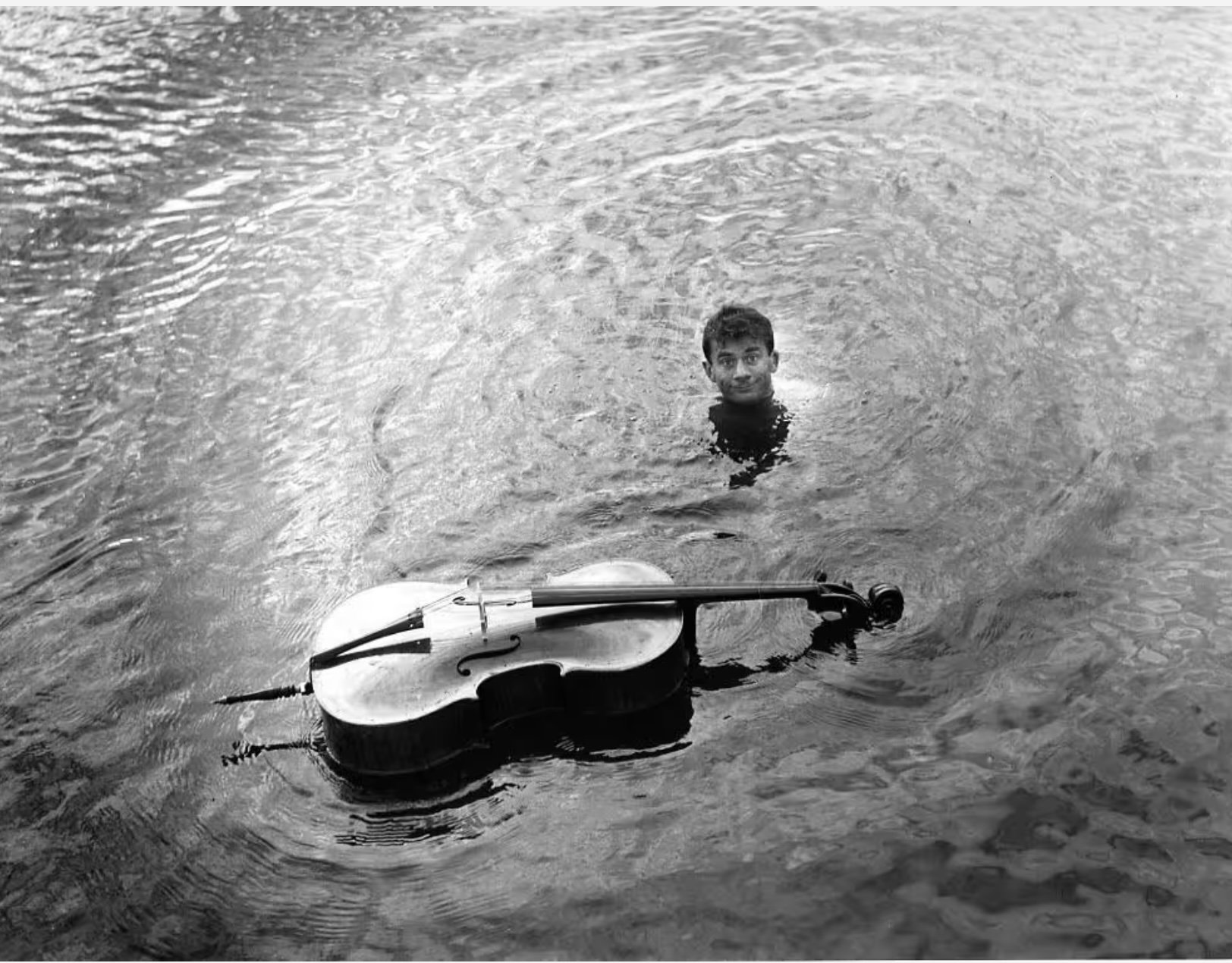
Daguerre was a French artist, inventor, and showman who had been experimenting with ways to capture images. In 1829, he formed a partnership with Niépce. Together, they worked to improve the process of fixing images using light and chemistry.
After Niépce died in 1833, Daguerre continued the work. He developed a new method using a silver-coated copper plate treated with iodine vapour. After exposure in a camera, the plate was developed using mercury vapour and then fixed so the image would not fade.
He called his invention the daguerreotype.
The daguerreotype produced remarkably detailed images on a polished metal plate. Unlike modern photographs, each daguerreotype was unique—there was no negative from which copies could be made. But the results were stunning for the time.
Most importantly, Daguerre dramatically reduced exposure times. While Niépce’s early process needed hours, daguerreotypes could be made in around 20 to 30 minutes, and later improvements made the process even faster.
The daguerreotype was announced to the public in Paris on 19 August 1839 at a meeting of the French Academy of Sciences. This moment is often seen as the official birth of photography as a public invention.
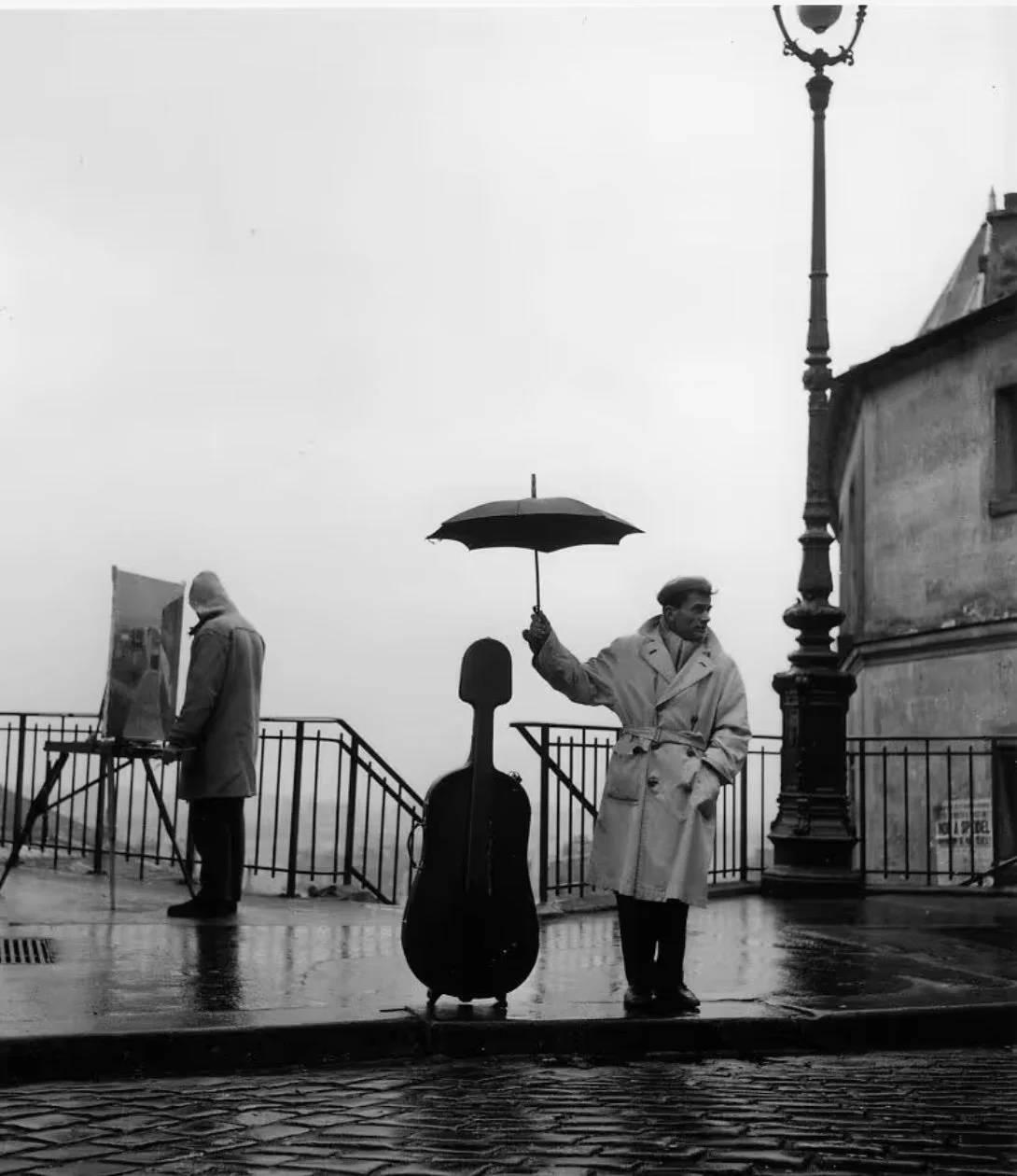
La violoncelle sous la pluie, Paris 1957 - Robert Doisneau
The French government acquired the rights to the process and released the working instructions freely, describing it as a “free gift to the world.”
Suddenly, photography was no longer a secret experiment. It became a sensation!
Portrait studios opened in cities around the world. Families who had never been able to afford a painted portrait could now have their likeness recorded. People photographed loved ones, landmarks, streets, and historic events.
Photography changed far more than how people took portraits.
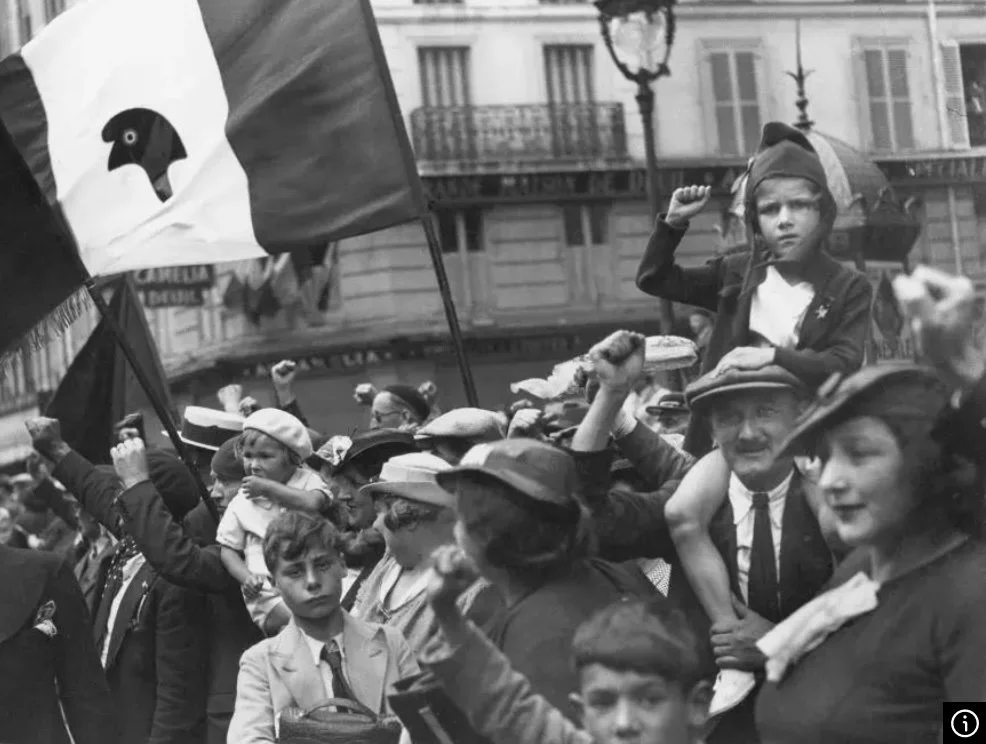
Willy Ronis
It transformed science, allowing researchers to record experiments, specimens, and distant places. It changed journalism, giving the public visual evidence of events. It influenced art, challenging painters to explore new ideas about realism, expression, and abstraction.
Perhaps most importantly, photography changed memory.
Before photography, history was largely remembered through words and artistic interpretation. After photography, ordinary people could preserve their own faces, homes, families, and experiences. A photograph became proof that a moment had happened.
That idea still feels powerful today. Every photo on a phone, every family album, and every image shared online traces its origins back to those early experiments with light.
It is remarkable to think how far photography has come.
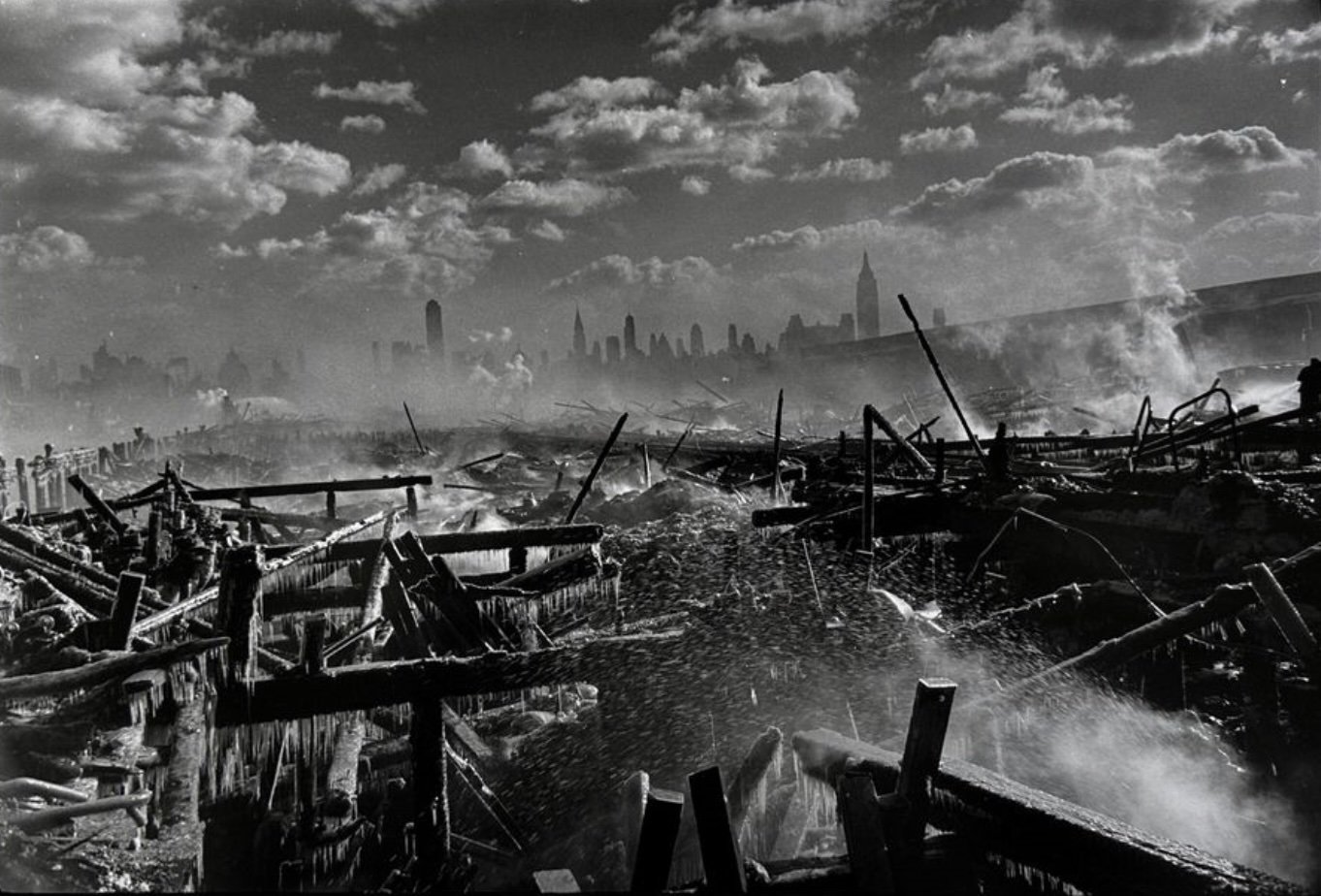
Incendie à Hoboken, face à Manhattan - Henri Cartier-Bresson 1947
Niépce needed hours of sunlight, a pewter plate, and chemical coatings to create one image. Daguerre needed polished metal plates, mercury vapour, and careful handling. Today, we can take a photograph in a fraction of a second, edit it instantly, and share it with people on the other side of the world.
Yet the basic principle remains the same: light creates an image.
The tools have changed beyond recognition, but the wonder has not. Photography still lets us pause time, preserve memories, and tell stories without words.
The invention of photography was not simply the creation of a new technology. It was the beginning of a new way of seeing.
Joseph Nicéphore Niépce gave the world its first surviving permanent photograph. Louis Daguerre turned that discovery into a practical process that could spread across the globe. And countless earlier experimenters helped lay the groundwork for a revolution in visual communication.
Two hundred years later, photography is everywhere. But every image still carries a little of that early magic: the ability to capture light, hold onto a moment, and make it last.
For me, the act of taking a photograph, drawing with light, gives me abundant joy. Thank you Joseph Nicéphore Niépce!